


05 Jul Brewing Coffee with a Stovetop (Moka) Pot
Bold, comforting, and a little bit theatrical
The stovetop coffee pot – often called a moka pot – sits somewhere between espresso and filter coffee. It doesn’t need pods, electricity, or fancy tech. Just heat, water, coffee, and a bit of timing. Done right, it makes a rich, full-bodied cup that’s perfect on its own or with milk.
Here’s how to get the best out of it.
What is a moka pot, exactly?
A moka pot brews coffee by using steam pressure. As the water in the bottom chamber heats up, pressure pushes it up through the coffee grounds and into the top chamber. It’s simple physics – and very satisfying to watch.
The result is a strong, intense coffee, but not true espresso (the pressure is much lower). Think: deep, round, and comforting.
What you’ll need
- A moka pot
- Fresh coffee, ground finer than filter, coarser than espresso
- Fresh water (filtered if you can)
- A stovetop
Step-by-step brewing guide
- Fill with hot water
Fill the bottom chamber with hot water up to the safety valve. Starting hot reduces bitterness and prevents the coffee from “cooking” too long. - Add coffee (don’t tamp!)
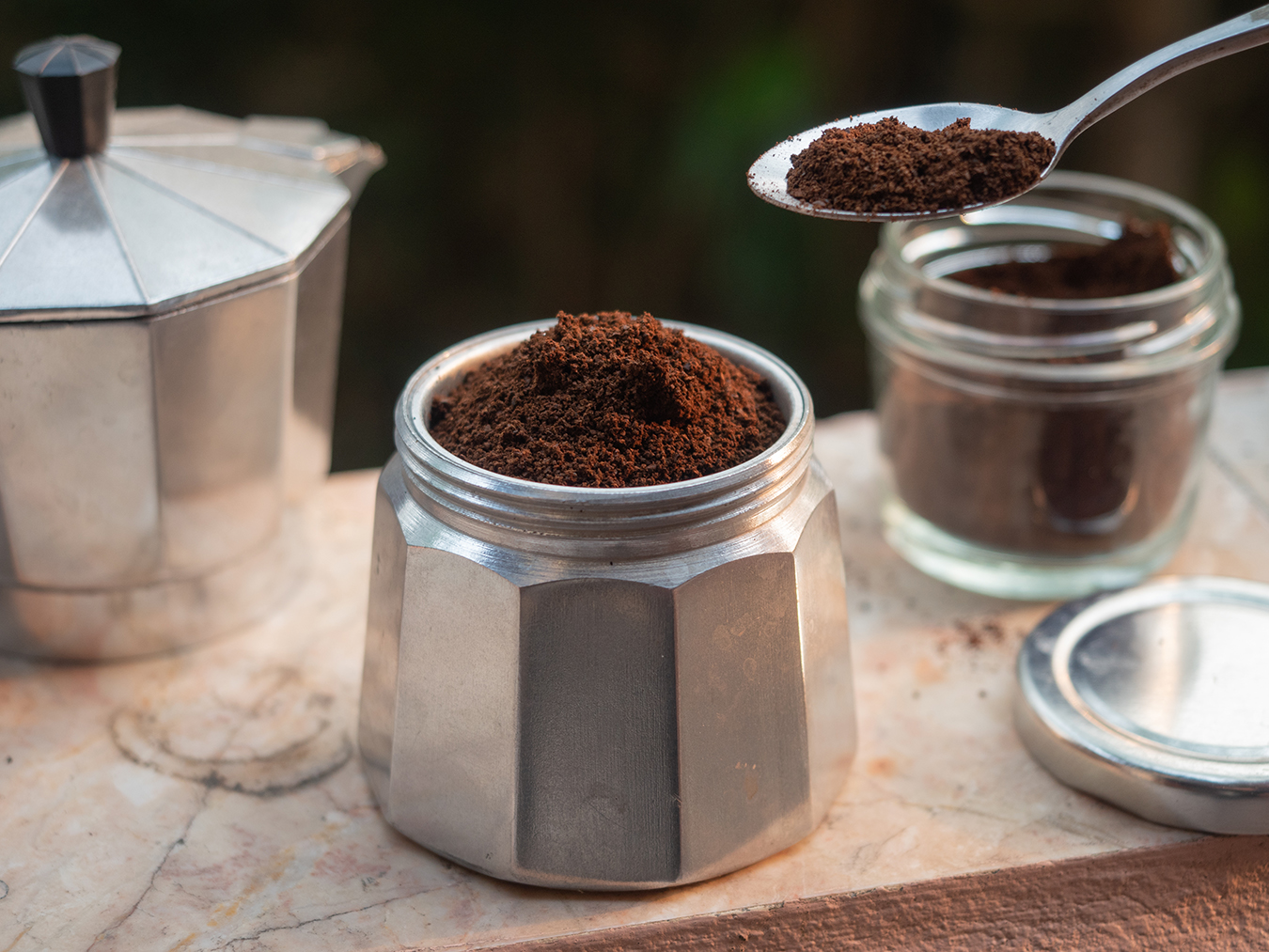
Fill the basket loosely with ground coffee. Level it off, but don’t press it down – tamping blocks the flow and creates harsh flavours. - Assemble and heat gently
Screw the pot together firmly and place it on medium-low heat. Keep the lid open so you can see what’s happening. - Watch and listen
Coffee should flow slowly, like warm honey. When it starts to sputter or hiss, it’s done. - Stop the brew
Remove from heat immediately. Some people run the base under cold water to halt extraction – a good move if your coffee tastes bitter.
How it should taste
A well-brewed stovetop coffee is:
- bold and aromatic
- heavier than filter
- smoother and sweeter than badly made espresso
Perfect black, or topped with hot milk for a café-style cup at home.
Common mistakes to avoid
- Using boiling heat → burnt flavours
- Tamping the coffee → bitterness
- Letting it sputter too long → over-extraction
- Leaving old coffee oils in the pot → stale taste
(Pro tip: rinse with water only – no soap.)
Why people love moka pots
They’re timeless, affordable, and deeply ritualistic. Brewing with a stovetop pot slows things down just enough to remind you that coffee isn’t meant to be rushed.
Strong coffee. Simple tools. Great results.